Lockheed Electra 10E Special - NR16020: Difference between revisions
Jump to navigation
Jump to search
No edit summary |
No edit summary |
||
| Line 1: | Line 1: | ||
"The airplane, a Lockheed No. NR 16020, was really fascinating. It was obviously engineered and equipped for very long non-stop flights. The fuselage was solid gasoline tanks, two rows of them, from bulkhead to bulkhead, with just enough room between the tops of the tanks and the overhead for a person to be able to crawl from the stern to the cockpit on their tummy. Located in the stern, just opposite the main entrance door was a small table for the navigator's use. The radio transmitter was installed above this table. Jammed in what space they could find was a toilet." [[Joe Gurr]] to [[Fred Goerner]], 3 May 1982. | [[Joe Gurr}}: "The airplane, a Lockheed No. NR 16020, was really fascinating. It was obviously engineered and equipped for very long non-stop flights. The fuselage was solid gasoline tanks, two rows of them, from bulkhead to bulkhead, with just enough room between the tops of the tanks and the overhead for a person to be able to crawl from the stern to the cockpit on their tummy. Located in the stern, just opposite the main entrance door was a small table for the navigator's use. The radio transmitter was installed above this table. Jammed in what space they could find was a toilet."<ref>[[Joe Gurr]] to [[Fred Goerner]], 3 May 1982.</ref> | ||
:"Gurr's recollections do not correspond exactly to what is known about the aircraft: there was just one row of tanks, the transmitter was below the table, and the toilet was in a standard location." | :"Gurr's recollections do not correspond exactly to what is known about the aircraft: there was just one row of tanks, the transmitter was below the table, and the toilet was in a standard location."<ref>[[Ric Gillespie]], 2 March 2009 [[AESF| Forum]].</ref> | ||
[[Image:parkinglot.jpg|thumb|300px|Lockheed Electra 10E Special at Burbank, California on May 21, 1937 just prior to the departure of the second world flight attempt. Noonan can be seen beside the open trunk of his Terraplane roadster. His wife, Mary Bea, stands near the front of the car. Amelia is talking with someone near the cabin door of the airplane.]] | [[Image:parkinglot.jpg|thumb|300px|Lockheed Electra 10E Special at Burbank, California on May 21, 1937 just prior to the departure of the second world flight attempt. Noonan can be seen beside the open trunk of his Terraplane roadster. His wife, Mary Bea, stands near the front of the car. Amelia is talking with someone near the cabin door of the airplane.]] | ||
== Windows come and go == | |||
* "As delivered in July 1936, the airplane had only two windows in the cabin. These were the aftmost standard airline windows and were directly opposite each other. Then in January of 1937 a window was installed in the cabin door on the port side and a larger-than-standard window was installed on the starboard side. This last window is the one that was later skinned over in Miami."<ref>[[Ric Gillespie]], 31 May 2000 [http://www.tighar.org/forum/Highlights81_100/highlights90.html Forum.]</ref> | |||
== Gallery == | == Gallery == | ||
| Line 16: | Line 19: | ||
</gallery> | </gallery> | ||
{{tcbug}} | {{tcbug}} | ||
== References == | |||
<references/> | |||
== Related articles == | == Related articles == | ||
Revision as of 14:05, 4 March 2009
[[Joe Gurr}}: "The airplane, a Lockheed No. NR 16020, was really fascinating. It was obviously engineered and equipped for very long non-stop flights. The fuselage was solid gasoline tanks, two rows of them, from bulkhead to bulkhead, with just enough room between the tops of the tanks and the overhead for a person to be able to crawl from the stern to the cockpit on their tummy. Located in the stern, just opposite the main entrance door was a small table for the navigator's use. The radio transmitter was installed above this table. Jammed in what space they could find was a toilet."[1]
- "Gurr's recollections do not correspond exactly to what is known about the aircraft: there was just one row of tanks, the transmitter was below the table, and the toilet was in a standard location."[2]

Windows come and go
- "As delivered in July 1936, the airplane had only two windows in the cabin. These were the aftmost standard airline windows and were directly opposite each other. Then in January of 1937 a window was installed in the cabin door on the port side and a larger-than-standard window was installed on the starboard side. This last window is the one that was later skinned over in Miami."[3]
Gallery
-
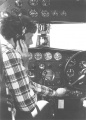
AEinstrument.jpg
-
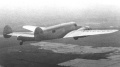
Electrairb.jpg
-

headon.jpg
-

overheadplane.jpg
-
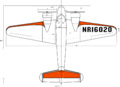
planform.gif
-

port.gif
-
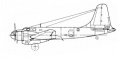
sideview.jpg


| All drawings, images, and photographs ©TIGHAR 1985-2024. Not to be used, distributed, copied, bought, sold, or otherwise poached. For permission to use images, please email TIGHAR. |
References
- ↑ Joe Gurr to Fred Goerner, 3 May 1982.
- ↑ Ric Gillespie, 2 March 2009 Forum.
- ↑ Ric Gillespie, 31 May 2000 Forum.