File:Survivor Camp (Wigram AFB Archives).jpg: Difference between revisions
Rickerjones (talk | contribs) (Remains of Norwich City survivors’ camp photographed by the New Zealand Pacific Aviation Survey Expedition in 1938. (Courtesy, Wigram Air Force Base Archives, RNZAF) “The lifeboat axes came in very useful for this. Small trees were cut down, trimmed) |
No edit summary |
||
| (2 intermediate revisions by one other user not shown) | |||
| Line 1: | Line 1: | ||
Remains of Norwich City survivors’ camp photographed by the New Zealand Pacific Aviation Survey Expedition in 1938. (Courtesy, Wigram Air Force Base Archives, RNZAF) | Remains of ''Norwich City'' survivors’ camp photographed by the New Zealand Pacific Aviation Survey Expedition in 1938. (Courtesy, Wigram Air Force Base Archives, RNZAF) | ||
“The lifeboat axes came in very useful for this. Small trees were cut down, trimmed and lashed between four large trees in the form of a square. A trellis of smaller trees and branches was formed on top and over this the two sails were spread. Around three sides a barricade was made to keep out the crabs, leaving the lee side open for the fire, which was soon got under way. The ground was cleared of twigs etc., and then covered with leaves over which was placed a couple of blankets and old canvas which had been washed ashore. Altogether it looked and was fairly comfortable.” Statement of Daniel Hamer, Master, S.S. Norwich City, from the Board of Trade’s Inquiry records. | “The lifeboat axes came in very useful for this. Small trees were cut down, trimmed and lashed between four large trees in the form of a square. A trellis of smaller trees and branches was formed on top and over this the two sails were spread. Around three sides a barricade was made to keep out the crabs, leaving the lee side open for the fire, which was soon got under way. The ground was cleared of twigs etc., and then covered with leaves over which was placed a couple of blankets and old canvas which had been washed ashore. Altogether it looked and was fairly comfortable.” [http://tighar.org/Projects/Earhart/Archives/Documents/Norwich_City/NorwichCity3.html Statement of Daniel Hamer, Master, ''S.S. Norwich City'', from the Board of Trade’s Inquiry records.] | ||
.jpg&oldid=2699)
.jpg&action=edit&oldid=2699)
.jpg&oldid=6179)
.jpg&action=edit)
Latest revision as of 22:21, 20 January 2011
Remains of Norwich City survivors’ camp photographed by the New Zealand Pacific Aviation Survey Expedition in 1938. (Courtesy, Wigram Air Force Base Archives, RNZAF)
“The lifeboat axes came in very useful for this. Small trees were cut down, trimmed and lashed between four large trees in the form of a square. A trellis of smaller trees and branches was formed on top and over this the two sails were spread. Around three sides a barricade was made to keep out the crabs, leaving the lee side open for the fire, which was soon got under way. The ground was cleared of twigs etc., and then covered with leaves over which was placed a couple of blankets and old canvas which had been washed ashore. Altogether it looked and was fairly comfortable.” Statement of Daniel Hamer, Master, S.S. Norwich City, from the Board of Trade’s Inquiry records.
File history
Click on a date/time to view the file as it appeared at that time.
| Date/Time | Thumbnail | Dimensions | User | Comment | |
|---|---|---|---|---|---|
| current | 23:26, 17 March 2009 | 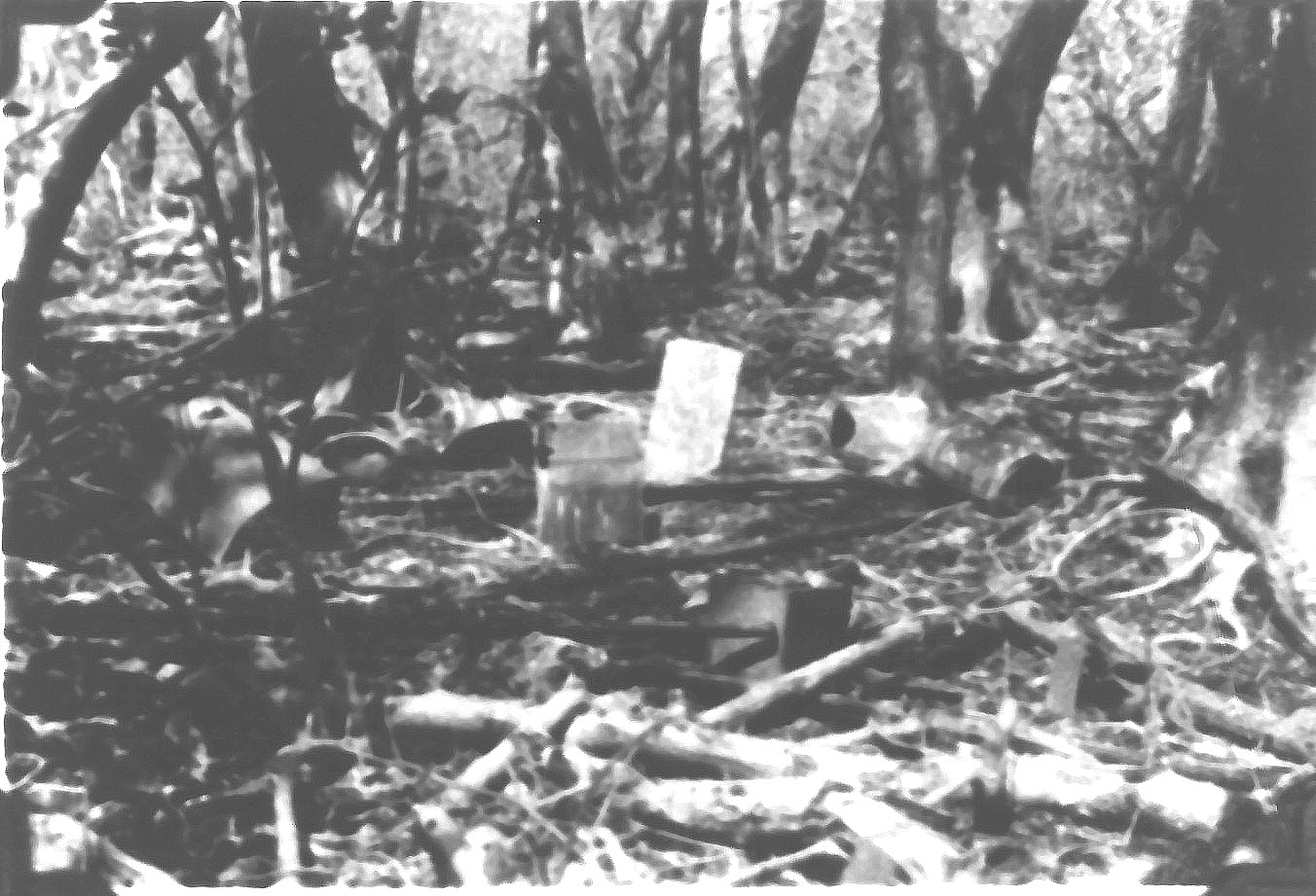 | 1,352 × 921 (357 KB) | Rickerjones (talk | contribs) | Remains of Norwich City survivors’ camp photographed by the New Zealand Pacific Aviation Survey Expedition in 1938. (Courtesy, Wigram Air Force Base Archives, RNZAF) “The lifeboat axes came in very useful for this. Small trees were cut down, trimmed |
You cannot overwrite this file.
File usage
The following page uses this file:
.jpg&oldid=6179)